Shaken or Stirred: How to Choose
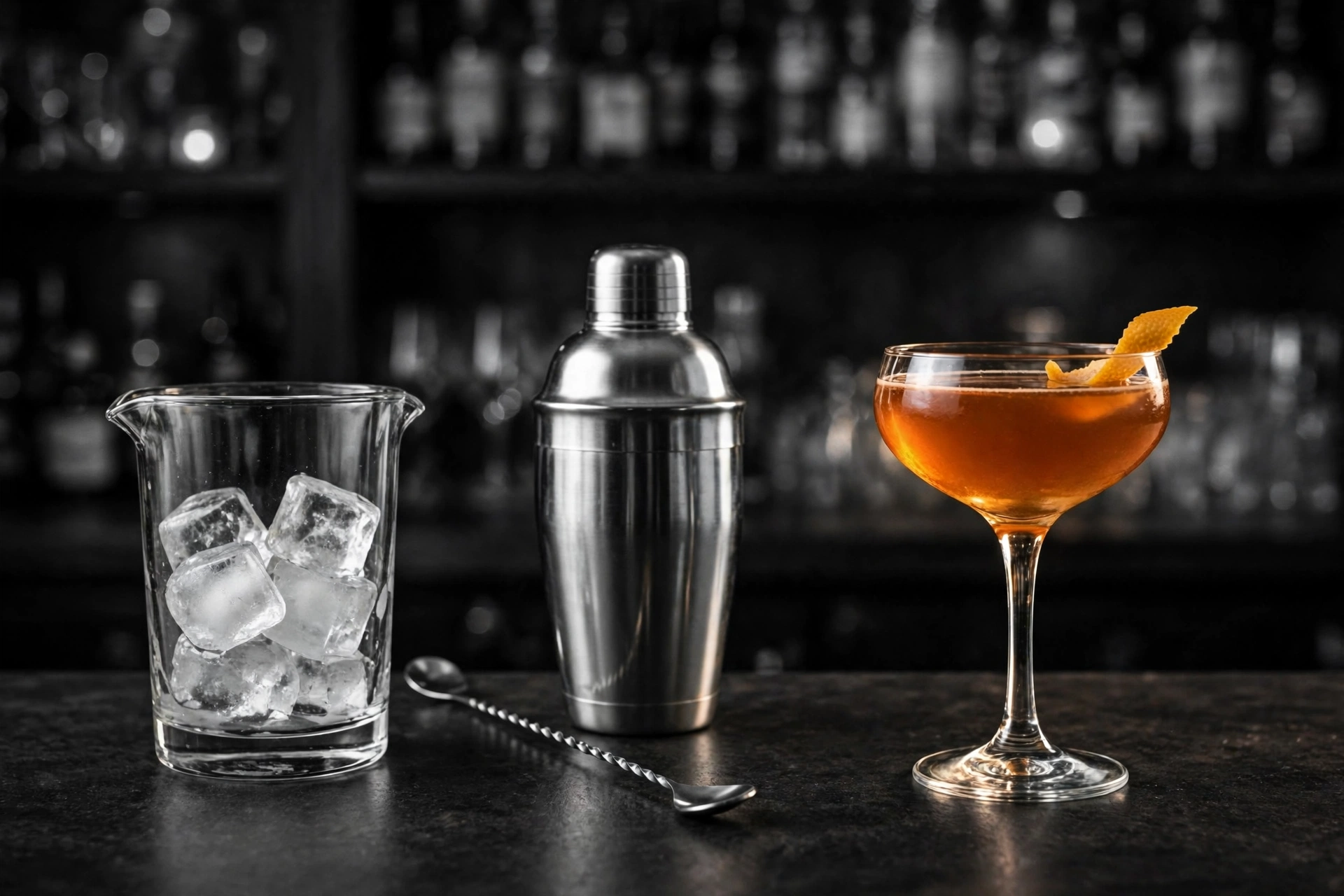
Short answer: Shake a cocktail when the recipe includes citrus juice, fruit juice, egg white, cream, or anything thick that needs force to blend, because shaking chills fast, mixes fully, and adds a light and airy texture. Stir a cocktail when the recipe is built only from spirits, vermouth, liqueurs, and bitters, because stirring chills the drink while keeping it silky, clear, and calm. If you remember only one line, use this one: juice means shake, spirits only means stir.
The rule in plain terms
Look at the ingredient list before you touch the ice. If fresh lemon juice or lime juice appears on it, or fruit juice, egg white, cream, or a thick syrup, the drink gets shaken. If every ingredient pours from a bottle of spirit, vermouth, liqueur, amaro, or bitters, and there is no juice anywhere in the build, the drink gets stirred.
The shaken shelf on this site makes the pattern easy to see. A Classic Daiquiri, a Classic Margarita, a Whiskey Sour, and a Paper Plane all carry fresh citrus, so all four shake. The stirred shelf is just as clear. A Classic Martini, a Manhattan, a Negroni, and a Traditional Old Fashioned are built from bottles only, so all four stir.
What shaking does
Shaking is violent in a good way. The ice crashes around the tin, the liquid slams from end to end, and everything in the drink is forced to become one thing. The drink chills faster than any other method can manage, a little extra water melts in and softens the alcohol edge, and the citrus wakes up and spreads through the whole glass instead of sitting in sharp pockets.
Shaking also changes the feel of the drink. Tiny air bubbles work their way into the liquid and give it a lighter and brighter texture, and egg white whips into a smooth foam that sits on top like a cap. A shaken drink often pours a little cloudy and then clears as it rests in the glass. That cloud is mostly air, not a fault, and it fades while you watch.
What stirring does
Stirring is gentle control. The spoon glides around the inside of the mixing glass, the ice turns in a calm circle, and the drink chills with far less melt than a careless shake would add. Nothing gets beaten up, nothing clouds, and the finished drink pours clear and bright with a silky weight that sits softly on the tongue.
That calm is exactly what a spirit only drink wants. The aroma of the gin, the warmth of the whiskey, and the herbs in the vermouth all stay intact and arrive in order, one after the other, instead of being smashed together. A stirred drink should look like polished glass in the glass, and taste just as clean.
Timing and ice
For a shaken drink, fill the shaker at least two thirds full with fresh ice and shake hard for 12 to 15 seconds. You are listening as much as timing. The ice should sound loud and rhythmic, and the tin should frost over and feel cold through your hands. Strain the drink off that ice when you pour, either into a chilled glass with no ice, or over fresh ice in the serving glass.
For a stirred drink, fill the mixing glass with plenty of fresh ice and stir smoothly for 25 to 30 seconds, keeping the back of the spoon against the glass and the ice moving in one quiet circle. Taste before you strain. If the drink still bites, stir a little longer, because dilution is an ingredient in every stirred drink and the spoon is how you measure it.
In both cases the ice itself does half the work. Hard and fresh cubes chill far better than wet ice that has sat out melting, and plenty of ice chills faster than a small amount, which feels backwards until you try it. A drink swimming in ice reaches the right temperature before it can turn watery. A drink with two sad cubes just sits there getting diluted and never really getting cold.
The grey areas
Some drinks live in both worlds, and the ingredient rule still settles them. A French 75 carries lemon juice and syrup, so the base shakes hard with ice, and only then does the sparkling wine go in, poured gently on top so the bubbles survive. Anything with soda or sparkling wine follows the same logic. The bubbles are finished last, never shaken, because shaking a fizzy ingredient sends it flat and sends half of it up the walls of the tin.
Egg white drinks ask for one extra move. Shake the ingredients first without ice so the white can foam, then shake again with ice to chill the drink and set the foam. Bartenders call the first pass a dry shake, and it is the difference between a thin drink with a few bubbles and a proper cap of foam you could rest a garnish on.
And the famous Martini argument deserves a calm answer. Shaking a Martini does not ruin it, and gin does not bruise, whatever the old stories say. Shaking simply makes a different drink: colder at first, cloudier, more diluted, and more broken up in texture. If that is the Martini you love, shake it with pride. Just know that you are choosing a style, not breaking a law.
Common mistakes
Stirring a citrus drink. The juice and syrup never fully join the spirit, the drink stays warm at the edges, and the sweet and sour parts arrive in separate sips instead of one balanced mouthful.
Shaking a spirit only drink until it turns pale. All that force adds water and air the drink never asked for. The clarity goes, the silk goes, and the spirits taste thin and tired instead of calm and strong.
Using too little ice. A small amount of ice melts fast and dilutes the drink before it ever gets cold. Fill the shaker or the mixing glass properly and the drink chills quickly and stays in balance.
Never tasting a stirred drink. A shake is over in seconds, but a stir gives you time, so use it. Taste at the end of the stir and add a few more turns if the drink still feels hot or harsh. That small check is the whole advantage of the method.
A simple test to learn the difference
Build the same drink twice and change only the method. Make a small Martini and stir it, then make the same Martini and shake it, and taste the two side by side while they are both fresh. The stirred glass will taste silky and clear. The shaken glass will taste colder, softer, and a little cloudy, with the gin pushed back and the water pushed forward.
Then do the same test in the other direction with a Daiquiri. The shaken one will taste bright and joined up, while the stirred one will taste loose and unfinished, with the lime and the syrup drifting apart. After those two tests you will never need to memorise a list again, because your tongue will know the rule. Juice means shake. Spirits only means stir.
Questions
Should a Martini be shaken or stirred?
Stirred. A Martini is gin and dry vermouth with no juice at all, so stirring keeps it silky, clear, and cold with gentle dilution. Shaking makes it colder at first, cloudier, and more diluted, with a sharper and more broken texture. Some drinkers love it that way, but the classic serve is stirred.
Why do drinks with citrus juice need shaking?
Citrus juice, syrup, and spirit all sit at different weights and will not fully blend with a gentle stir. Shaking forces them together, chills the drink fast, softens the sharp edge of the citrus, and adds tiny air bubbles that lift the texture of drinks like a Daiquiri or a Margarita.
How long should you shake a cocktail?
Shake hard for 12 to 15 seconds with plenty of fresh ice, until the outside of the tin feels frosty and your hands feel the cold through the metal. Drinks with egg white need a first shake without ice to build the foam, then a second shake with ice to chill and set it.
How long should you stir a cocktail?
Stir smoothly for 25 to 30 seconds over plenty of fresh ice in a mixing glass. Taste as you go near the end. The goal is a drink that is cold and silky with gentle dilution, never watery, so a calm and steady stir beats a fast and splashy one every time.
What can you use if you have no shaker or mixing glass?
A clean jar with a tight lid shakes a cocktail perfectly well, and any sturdy glass or small jug works for stirring with a long spoon. Strain the drink off the ice as you pour, and the result will be close enough that most guests will never know the difference.